Scalp Microneedling: Sessions, Results and Aftercare
Medically reviewed by Dr. Kate Healy, MB BCh BAO, MICGP, CFPC – 2026-10-14
Scalp microneedling is usually given as a course of in-office sessions, with a home-care routine between visits. After each session, expect redness and tenderness for one to three days. Any change in hair density develops gradually over months rather than weeks, and it is judged against how your hair looked at the start. Results vary and are not guaranteed.
If you are considering scalp microneedling, you probably want to know what a session involves, how much time a course takes and how to look after your scalp afterwards. Whether microneedling is likely to help is a separate question: our article on microneedling for hair loss covers the evidence, and Merrion's page on hair loss and thinning hair treatment explains how the type of hair loss is assessed first.
Before your first session
A course starts with an assessment, not a treatment. Scalp microneedling is designed for pattern thinning on a healthy scalp, so the first step is to confirm the type of hair loss and look for anything that needs attention first.
Do not stop any prescribed medicine before treatment without advice from the clinician who prescribed it. It helps to mention any blood-thinning medicines, a tendency to bleed or bruise easily, a history of raised or keloid scarring, scalp conditions such as psoriasis or eczema, recent infections and whether you are pregnant, breastfeeding or planning a pregnancy. Each of these may mean treatment is adjusted or deferred.
What happens during a scalp microneedling session
At Merrion, scalp microneedling is part of the Hair Growth Microneedling Program. Each in-office session combines three steps:
- Scalp microneedling with the TWIST by Dermaroller, a Health Canada–licensed microneedling device, treating the areas of thinning at a fixed needle depth of 0.5 mm.
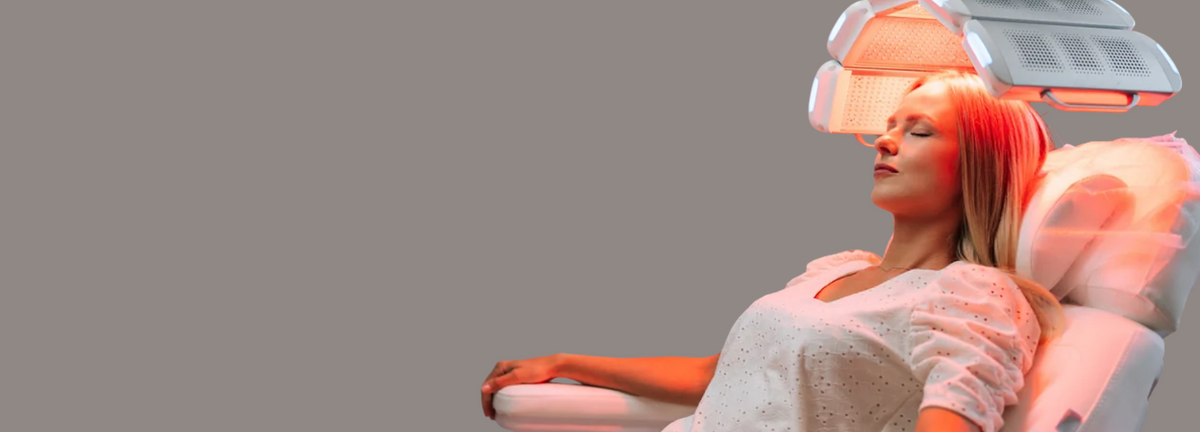
- Healite LED light therapy as supportive scalp care.
- An XcellarisPro scalp ampoule, applied as part of the treatment. The course alternates between two formulations from one session to the next.
Pinpoint bleeding during microneedling is normal and settles quickly. Because the needle depth is shallow, the treatment is usually done without numbing cream. Most people describe the sensation as prickling or scratching; how much discomfort you feel depends on the area treated and your own sensitivity.
How many scalp microneedling sessions are needed?
The Hair Growth Microneedling Program is a complete course of eight in-office treatments; single sessions are not offered. Sessions are usually about two weeks apart, so the in-office part of the course runs over roughly four months, with home care continuing between visits.
In published studies, clinic microneedling for hair has usually been repeated weekly to monthly, with results assessed after three to six months.[1][2] Because pattern hair loss tends to progress, it is worth discussing what happens after the course before it begins.
Aftercare after scalp microneedling
Aftercare protects the scalp while it heals and keeps the home-care routine on track. Follow the written instructions you are given; this is a summary of Merrion's scalp aftercare.
| When | What to do |
|---|---|
| Day of treatment | Avoid heat (hot showers, baths, saunas, hot tubs), exercise and sweating. Do not wash your hair for 24 hours. Do not scratch, pick or rub the scalp. No styling products or dry shampoo. Avoid direct sun and wear a loose, clean hat. Use a clean pillowcase. |
| From day 2 | Wash gently in lukewarm water with a recommended shampoo, avoiding harsh or medicated products. Apply the XcellarisPro scalp lotion once daily to thinning areas and leave it on. Protect exposed scalp with a hat or a gentle SPF. |
| From day 5 | Restart the home dermaroller, twice a week, as instructed, if the scalp has settled. |
| Any time symptoms worsen | Contact the clinic if redness, swelling or pain increase, or if pustules or other signs of infection appear. |
Our guide to using a derma roller for hair explains the home rolling routine, including cleaning and storing the roller.
Why home rolling starts later
The in-office treatment and the home roller both use fine needles, but they are not interchangeable. The scalp needs a few days to settle after an in-office session, so the aftercare restarts the shallow home roller from day 5 rather than the next morning.
Can you wash your hair after microneedling?
Not for the first 24 hours. After that, wash gently in lukewarm water with the shampoo you have been advised to use, and avoid harsh, medicated or heavily fragranced products while the scalp settles.
Side effects and when to contact the clinic
After scalp microneedling, redness, warmth, tightness, tenderness or mild swelling are common for 24 to 72 hours. Mild flaking or tiny scabs over the following days are also normal and should be left to shed on their own.
Contact the clinic if you notice increasing redness, swelling or pain, pustules, signs of infection or anything else that seems unusual. These are uncommon, but they need to be reviewed rather than waited out.
Microneedling hair results: what to expect and when
Hair grows slowly, and each follicle cycles through growing, resting and shedding phases. Any change from treatment therefore takes months to show. Studies of microneedling for pattern hair loss typically assess results after three to six months, and the full response may take longer to judge.[1][2]
Some people notice that hair feels thicker or that the scalp is less visible; others see little change. Photographs taken in consistent lighting at the start of a course make gradual change easier to judge than memory alone.
Following the home-care routine between sessions, as advised, is part of the course. Shedding that starts or increases during a course should be reviewed, because it may reflect another trigger.[3] Our guide to why hair thins explains common triggers.
After the course: maintaining any improvement
Pattern hair loss is a long-term tendency, so any improvement usually depends on continued care. A review towards the end of the course is a sensible point to compare photographs, decide whether further treatment is worthwhile, and agree what home care to continue. If there has been little change, that review is also the time to discuss other options rather than repeating the same course unchanged.
When an assessment is worthwhile
An assessment is useful before committing to any course. During an assessment, Dr. Kate considers the type and extent of thinning, scalp health, medicines and your plans around pregnancy, then explains whether scalp microneedling is appropriate and what a realistic result may look like for you.
Organise your concerns before a visit. The quiz helps you describe what you notice; it does not replace an examination.
To discuss whether scalp microneedling suits you, book a complimentary consultation with Dr. Kate.
Frequently asked questions
Does scalp microneedling hurt?
Most people feel prickling or scratching during treatment, which is usually done without numbing cream because the needle depth is shallow. The scalp may be tender for one to three days afterwards.
How long does redness last after scalp microneedling?
Redness, warmth and tenderness usually settle within 24 to 72 hours. Redness that increases rather than fades should be reported to the clinic.
Can I exercise after scalp microneedling?
Avoid exercise, sweating and heat on the day of treatment. Follow your aftercare instructions for when to resume your usual routine.
How long before I see results from scalp microneedling?
Change is gradual. Studies usually judge results after three to six months, and the full response may take longer.
How much does scalp microneedling cost?
At Merrion, scalp microneedling is offered as a complete eight-treatment course that includes the home-care items; details are on the Hair Growth Microneedling Program page. Suitability is confirmed at a complimentary consultation first.
Is scalp microneedling the same as microneedling for skin?
The principle is similar, but the aims, settings and aftercare differ. Merrion's page on microneedling for skin covers facial and body treatment; scalp microneedling is offered within the Hair Growth Microneedling Program.
Can I have scalp microneedling while pregnant or breastfeeding?
Scalp microneedling is usually deferred during pregnancy. If you are pregnant, breastfeeding or planning a pregnancy, seek individual medical advice before starting any hair loss treatment.
Sources
- Gupta AK, et al. Relative effects of minoxidil 5%, platelet-rich plasma, and microneedling in pattern hair loss: a systematic review and network meta-analysis. Skin Appendage Disord. 2023;9(6):397–406.
- Dhurat R, et al. A randomized evaluator blinded study of effect of microneedling in androgenetic alopecia: a pilot study. Int J Trichology. 2013.
- Hughes EC, Syed HA, Saleh D. Telogen effluvium. StatPearls. Updated 2024.
This information is educational and does not replace personalised medical assessment.