Derma Roller for Hair Growth: How to Use One Safely
Medically reviewed by Dr. Kate Healy, MB BCh BAO, MICGP, CFPC – 2026-10-22
A derma roller can be a useful part of home care for pattern thinning, usually alongside in-clinic treatment or a topical product. On its own, the evidence that a home roller improves hair growth is limited, because most research has used deeper microneedling performed in a clinic. Used with a short needle, good hygiene and realistic expectations, it is a supporting step rather than a treatment in itself.
If you are wondering whether a derma roller for hair growth is worth trying, the useful questions are what it can realistically add, which needle size is appropriate at home, and how to use it without irritating the scalp. Merrion's page on hair loss and thinning hair treatment explains why the type of hair loss matters first, and our article on microneedling for hair loss covers the clinic evidence.
Does a derma roller work for hair growth?
The studies that support microneedling for hair loss mainly involve clinic treatment, often at greater depths than home rollers, and frequently combined with topical minoxidil.[1][2] There is much less research on low-depth rollers used at home, so it is not possible to say how much a roller adds by itself.
What a home roller can reasonably do is keep the scalp routine consistent between clinic visits and support the application of a topical product. That is the role it has in Merrion's home-care routine.
Derma roller vs in-clinic microneedling
| Home derma roller | In-clinic scalp microneedling | |
|---|---|---|
| Needle length | Short (Merrion's home roller is 0.2 mm) | Fixed at 0.5 mm in Merrion's in-office protocol |
| Who uses it | You, at home, following instructions | A trained clinician, in a clinical setting |
| Aim | Support a home-care routine and topical application | Stimulate the scalp's healing response as part of a course |
| Evidence for hair | Limited for home rollers on their own | Strongest for pattern hair loss, mostly combined with minoxidil |
| Main risks | Irritation or infection if hygiene is poor or the scalp is inflamed | Temporary redness, tenderness and pinpoint bleeding; infection is uncommon |
| Available at Merrion? | Yes: as part of the Program's home-care kit | Yes: within the Hair Growth Microneedling Program, after assessment |
Home rolling supports the in-clinic course; it does not replace it. This comparison is a basis for discussion, not a reason to choose one over the other on your own. Our guide to scalp microneedling sessions, results and aftercare explains the clinic side.
Which derma roller size is best for hair?
Home rollers for the scalp use short needles, typically around 0.2 to 0.25 mm. Longer needles cause more bleeding and carry a greater risk of infection and irritation, so deeper microneedling is generally performed in a clinic rather than at home.
Merrion's home-care routine uses a 0.2 mm Dermaroller; in-office sessions use a 0.5 mm needle depth. A longer needle is not necessarily more effective, and it is not a reason to roll harder or more often.
How to use a derma roller for hair
Merrion's home rolling routine, used twice a week on clean, dry hair:
- Disinfect the roller with the roller cleaner and let it air-dry.
- Roll the thinning areas gently for about three minutes, using light pressure. The aim is even coverage, not bleeding.
- Massage in a few drops of the scalp lotion you have been given, as that day's application.
- Disinfect the roller again, let it dry and store it in its case.
Never share a roller, and never use it on broken, irritated or infected skin. If the needles look bent or damaged, stop using it. Avoid adding other oils, acids or strong active products straight after rolling; more products tend to add irritation rather than benefit. Redness after rolling is not a measure of how well it is working.
How often to use a derma roller for hair growth
In Merrion's routine, the home roller is used twice a week. More frequent rolling does not mean faster results and may irritate the scalp. If you miss a session, simply carry on with the next one; there is no need to make up for it by rolling more often or pressing harder.
After an in-clinic microneedling session, home rolling pauses while the scalp heals. In the Program aftercare, it restarts from day 5.
Using a derma roller with minoxidil or a scalp lotion
Rolling may help topical products penetrate the scalp, which is one reason it is often paired with minoxidil. Increased absorption can also increase irritation, so timing matters. Follow individual advice on whether to apply minoxidil on rolling days and how soon afterwards.
Minoxidil is the most established topical treatment for pattern hair loss[3] and is available without a prescription in Canada, but it is not recommended during pregnancy or breastfeeding. It is not part of the Program; Dr. Kate can discuss whether it may suit you alongside home care.
When not to use a derma roller
Pause home rolling and seek advice if your scalp is red, scaly, itchy or sore, if you have an active infection or open wound, or if you have a tendency to raised scarring. A derma roller is also not the answer to sudden or patchy hair loss, or to shedding that follows illness, childbirth or stress. Our guide to why hair thins explains those patterns.
Home rolling as part of the Hair Growth Microneedling Program
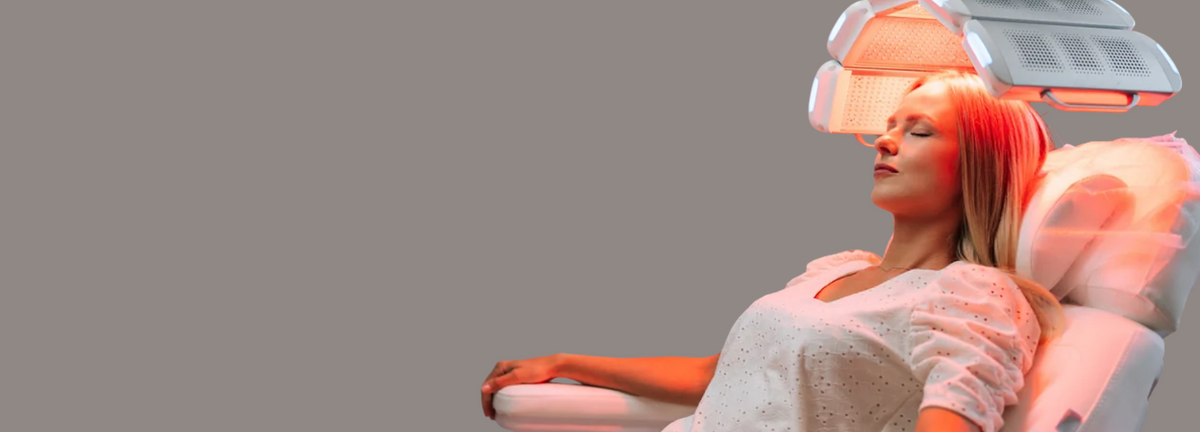
In Merrion's Hair Growth Microneedling Program, the home-care kit includes a 0.2 mm Dermaroller, a roller cleaner and an XcellarisPro scalp lotion. It is designed to carry the routine between eight in-office treatments, each of which combines scalp microneedling, Healite LED and an XcellarisPro serum. Written aftercare explains when to restart rolling after each visit.
When an assessment is worthwhile
If you have been rolling for several months without change, or you are not sure what type of hair loss you have, an assessment can help. During an assessment, Dr. Kate considers the pattern of thinning, scalp health and what you are already using before suggesting whether home care, a clinic course, a topical treatment or a medical work-up is the most appropriate next step.
Organise your concerns before a visit. The quiz helps you describe what you notice; it does not replace an examination.
For a hair and scalp plan matched to you, book a complimentary consultation with Dr. Kate.
Frequently asked questions
Can a derma roller cause hair loss?
Used gently on a healthy scalp, a short-needle roller is not expected to cause hair loss. Rolling too hard, too often, or over an inflamed scalp can cause irritation; new shedding should be reviewed.
Is a 0.25 mm derma roller effective for hair growth?
Short home rollers have not been studied as much as clinic microneedling, so their effect on their own is uncertain. They are more useful as part of a wider plan. Merrion's home-care kit uses a 0.2 mm roller.
Can I use the same derma roller for my face and hair?
Use a separate roller for the scalp. Keeping rollers separate, clean and unshared reduces the risk of infection.
Should I use a derma roller on wet or dry hair?
In Merrion's routine, roll on clean, dry hair, then apply the scalp lotion. Follow the instructions supplied with your kit.
Can a derma roller grow hair on a bald spot?
A roller is unlikely to restore hair to areas that have been bald for a long time. Round, patchy bald spots also need medical assessment rather than rolling.
Sources
- Gupta AK, et al. Relative effects of minoxidil 5%, platelet-rich plasma, and microneedling in pattern hair loss: a systematic review and network meta-analysis. Skin Appendage Disord. 2023;9(6):397–406.
- Dhurat R, et al. A randomized evaluator blinded study of effect of microneedling in androgenetic alopecia: a pilot study. Int J Trichology. 2013.
- Dakkak M, Forde KM, Lanney H. Hair loss: diagnosis and treatment. Am Fam Physician. 2024;110(3):243–250.
This information is educational and does not replace personalised medical assessment.